

Email List Growth Deliverability: Signup Sources Ranked by Risk
The safest ways to grow your list are the ones where people ask for your email directly on your own forms and then confirm their address. That approach is the foundation of email list growth deliverability, and Spamhaus recommends confirmed opt-in because confirmation keeps out bot signups and mistyped addresses. The sources that cause trouble later are the ones where consent is borrowed, bundled or merely implied, such as co-registration, sweepstakes entries and third-party leads. You can usually spot a bad source early by tracking complaints, bounces and engagement for each source separately instead of looking at one blended list average.
Where a subscriber came from shapes how they react to your mail long after they sign up. Someone who barely remembers opting in is more likely to hit “report spam,” and those reports add up. Google asks bulk senders to keep their spam rate below 0.1% and never reach 0.3%, and it notes that improvements in spam rate take time to show. A weak signup source can quietly damage your reputation for weeks before you see the cost, and the repair is slower still.
This guide ranks common signup sources from lowest to highest deliverability risk. It covers how to word consent at the form so subscribers know what to expect, and what to require from co-registration, sweepstakes and lead partners before you send them a single email. It also shows how to tag every subscriber’s source in your ESP so you can measure each cohort, how to build onboarding sequences that earn early engagement, and how to contain a source that goes bad before it affects the rest of your list. It closes with a checklist you can use to review any new signup source.
Why the signup source predicts your deliverability months later
How an address got onto your list decides whether that person expected to hear from you. Someone who knowingly asked for your mail tends to engage with it. Someone signed up through a pre-checked box, a contest entry or a third party may not remember you at all. That gap shows up as spam complaints, bounces and spam-trap hits long after the signup itself.
Mailbox providers are asking the same question you should be asking: do recipients actually want this mail? Google’s email sender guidelines tell senders to make sure recipients opt in, to confirm each address before subscribing it, and to avoid pre-checked opt-in boxes.
Complaints carry real consequences. Google asks senders to keep the user-reported spam rate below 0.1% and never let it reach 0.3%. Its sender guidelines FAQ also says bulk senders above 0.3% are not eligible for mitigation. Yahoo’s sender best practices likewise ask bulk senders to stay below a 0.3% complaint rate. Yahoo says the best way to get delivered is to send timely, relevant mail to an active, engaged audience.
Spam traps follow the same logic. Spamhaus says purchased, rented and harvested lists are the most common source of spam-trap hits. That is why this guide never recommends them.
The tricky part is timing. A weak source can look harmless in its first few sends. The damage often appears later, once that cohort is folded into your regular campaigns, where it mixes with good subscribers and becomes harder to isolate. Measuring each source separately lets you catch the problem while it is still small and contained.
If you’d rather have a team handle this, Digital Bulldogs’ done-for-you email delivery service covers the work, from list hygiene to inbox placement monitoring.
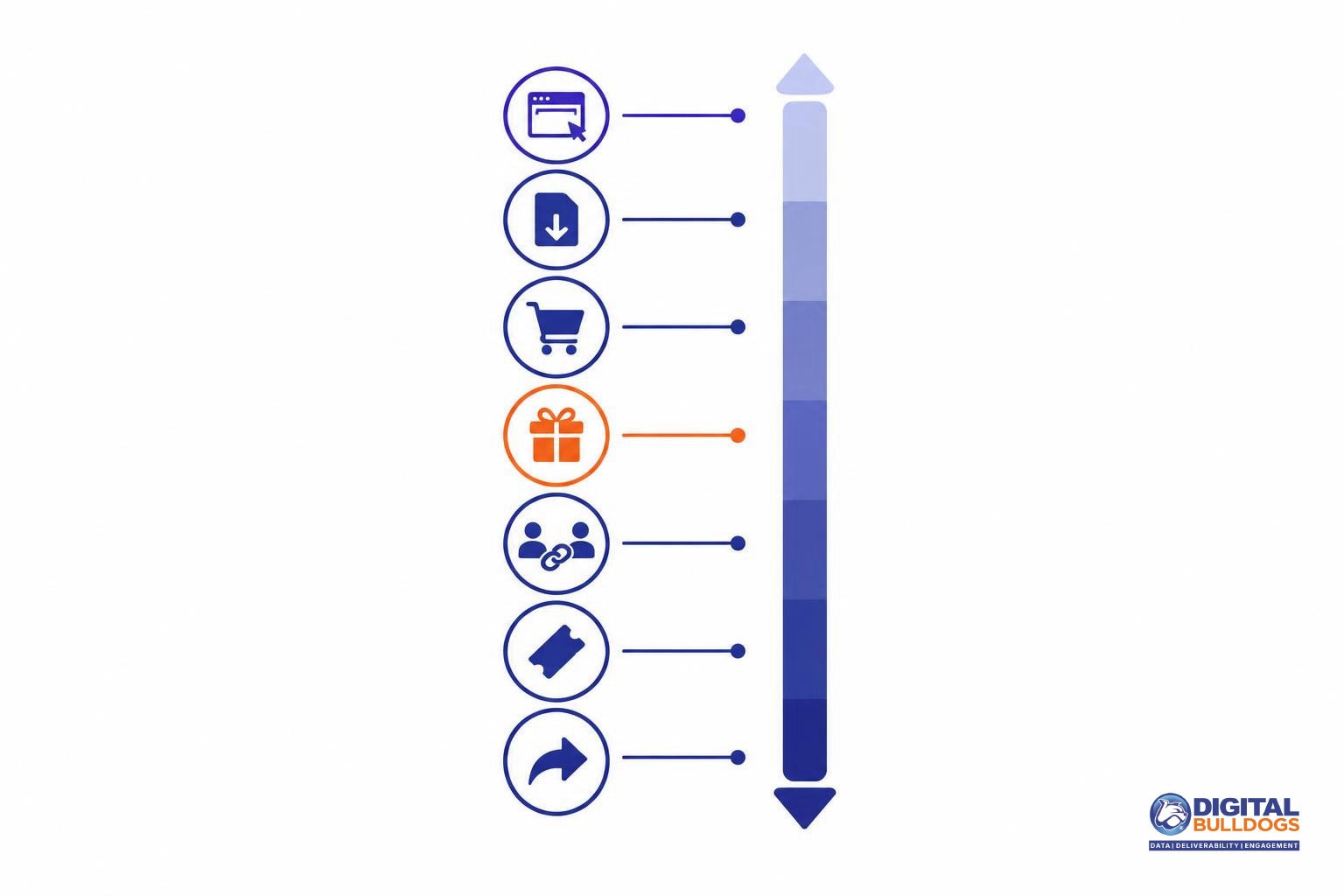
Signup sources ranked from lowest to highest deliverability risk
The ranking follows one test: how directly and knowingly did the person ask for mail from you? M3AAWG’s Sender Best Common Practices say consent must be clear and obvious, and they rate confirmed opt-in as the best method. The further a source moves from that standard, the higher it ranks below.
- Organic signup on your own site. The person found you, chose your brand and your topic, and asked to hear more. This is the closest match to clear, deliberate consent.
- Content lead magnet. The risk is people who wanted the guide or checklist but not ongoing email. Your form has to say plainly that emails will follow the download.
- Checkout opt-in. Risk rises when this relies on implied consent from the purchase alone. M3AAWG calls implied consent less than best practice. Senders who use it should watch complaints, opens and clicks closely and work toward explicit consent.
- Contests. Entrants are there for the prize, not your messages. Google’s email sender guidelines warn against opt-in boxes that are checked by default and sign people up automatically, a common shortcut on entry forms.
- Co-registration. Your offer sits on someone else’s form, often beside other brands. The person may barely register who you are, and you can’t see how the form looked when they signed up.
- Sweepstakes. These combine both problems: prize-driven motivation and entry forms that are often run or promoted by others. Many entrants won’t recognize your name when your first email arrives.
- Third-party lead generation. This is the highest risk. The person often never saw your brand at signup, and you can’t check how the form looked or how consent was worded.
The right controls help every tier: confirmation, clear wording and separate source tagging. Spamhaus notes that confirmation blocks bot signups and typo addresses. These controls lower the risk of a source, but they don’t erase it. A confirmed sweepstakes entrant still signed up for the prize first.
Consent wording and expectation-setting at the form
A good signup form tells people three things in plain words: who will email them, what those emails will contain, and roughly how often they will arrive. When the mail that shows up matches that promise, subscribers recognize it and open it. When it doesn’t, the spam button is often the quickest way out, and every report counts against you.
Say it before they click
- Who: Use the brand name subscribers will later see in the From line, not a parent company or a different list name.
- What: Be specific, for example “weekly deals on outdoor gear plus occasional partner offers.” If you plan to send partner offers, say so here.
- How often: A rough frequency such as “about three emails a week” is enough to set expectations.
Make consent a deliberate action
Use an unchecked box or a separate, clearly labeled button for marketing consent. Google’s guidance says to avoid pre-checked opt-in boxes that subscribe people automatically. M3AAWG’s best practices also hold that consent should be clear and obvious and treat implied consent, such as signing someone up because they made a purchase, as falling short of best practice.
Know the legal floor
CAN-SPAM is an opt-out law, so it doesn’t require prior consent. However, the FTC’s compliance guide does require accurate header information, honest subject lines, a valid postal address, and opt-out requests honored within 10 business days. Each separate email that violates the law can bring penalties of up to $53,088. Meeting that floor keeps you legal. Clear consent wording is what keeps your mail welcome.
Keep a dated record of every version
Save a dated copy of each version of your form’s consent text, and store the version ID with each subscriber record. If complaints rise or a partner asks how an address was collected, you can show the exact words that person agreed to.
The mechanics of the confirmation email itself deserve their own guide. Here, the focus is on making the promise at the form clear and honest.
Co-registration, sweepstakes and third-party leads: what to require before you mail
Before a single partner-sourced address touches your sending domain, you need proof that each person agreed to hear from you. You also need a way to keep that mail from dragging down your core program. If a partner can’t show consent record by record, don’t mail the leads.
Proof of consent for every record
Ask each partner to supply these details with every lead, not as a sample:
- Timestamp of the signup
- Source page where the form appeared
- Exact consent wording the person saw
- Whether your brand was named at the point of signup
This matters legally as well as for deliverability. Under the FTC’s CAN-SPAM compliance guide, a company whose products are promoted can’t contract away its responsibility when someone else sends the mail. Penalties can reach $53,088 per violating email.
Confirm before you market
Send a confirmation or permission message first, and hold back all promotional mail until the person responds. Spamhaus’s sender guidelines say unconfirmed addresses should not be mailed. Confirmation also screens out bot signups and mistyped addresses before they turn into bounces or trap hits.
Keep partner mail in its own lane
Send partner-sourced cohorts on a separate stream from your transactional and core newsletter mail. That way a weak source can’t sink everything else. Yahoo’s sender best practices note that separating mail by function helps each stream get the best delivery possible.
Know when to walk away
Stop using any source that won’t hand over consent records, however good its volume or price looks. The same goes for purchased, rented or harvested lists. Never use them, whatever a partner calls them.
Once a source passes these checks, run each campaign through the affiliate email pre-send checklist before it goes out.
Tag every subscriber’s source in your ESP so you can measure each cohort
Record where each subscriber came from at the moment they sign up, store it as fields in your ESP, and report results by source. If you skip this, a weak source can hide inside a healthy-looking list average until it has already damaged your reputation.
Fields to capture at signup
- Source type: website form, checkout, co-registration, sweepstakes, partner lead, event.
- Partner or campaign ID: which affiliate, publisher or ad campaign sent the subscriber.
- Form or page: the exact URL or form name.
- Signup date: so you can group subscribers into cohorts by when they joined.
- Consent wording version: which checkbox or promise the person actually saw.
- Confirmation status: confirmed, unconfirmed or pending.
Report by cohort, not just by list
Break complaints, bounces, opens or clicks, and unsubscribes out by source. This matters most for weaker consent types. M3AAWG’s sender best practices say implied consent, such as consent given at purchase, needs close monitoring of complaints, opens and clicks. Source tags make that monitoring possible.
Then match those numbers to mailbox provider data. Google calculates spam rate daily and shows it in Postmaster Tools. Yahoo shows complaints through its Complaint Feedback Loop. Line both up against the dates each cohort was mailed. If a spike follows the first send to a new partner’s leads, you know where to look.
Source data is first-party audience data
Clean, consented source records also make later work more reliable, including segmentation, custom audiences and identity matching. A subscriber with a known origin, consent version and confirmation status is a much stronger record to build on than an anonymous row.
If you’re not sure which sources are pulling your reputation down, an email deliverability audit can compare cohorts side by side and show where the problems start.
Onboarding sequences that earn early engagement
The first few emails after signup do three jobs. They confirm that the person meant to subscribe, they deliver what you promised, and they produce the opens, replies and clicks that tell mailbox providers your mail is wanted. Treat them as part of your deliverability, not just your marketing.
Send the confirmation and lead magnet immediately
Send the confirmation request and the promised download, discount or guide right away, while the person still remembers filling in your form. If you wait, a real subscriber can forget who you are and report the email as spam.
Restate the deal in the welcome message
Use the welcome email to repeat what you promised at the form:
- What your emails will contain
- How often they will arrive
- How to unsubscribe at any time
Keep the sender recognizable
Google’s email sender guidelines recommend that messages of the same category share a From address. They also note that senders saved in a recipient’s contacts are less likely to be marked as spam. Pick one From address for each mail stream, keep it the same, and invite new subscribers to add it to their contacts.
Make leaving easy
Google says one-click unsubscribe helps keep spam rates low. Yahoo’s sender best practices require bulk senders to support it and advise sending timely, relevant mail to an active, engaged audience. A subscriber who can leave in one click is less likely to press the spam button instead.
Pace riskier cohorts and suppress non-engagers early
Higher-risk cohorts, such as subscribers from sweepstakes or co-registration, should get a slower, lighter start. Send fewer messages and wait longer between them until they show real engagement. If someone never opens or clicks during onboarding, suppress them early rather than mailing them indefinitely.
For sending practices beyond onboarding, see our complete guide to reaching the inbox.
When a signup source goes bad: contain it before it spreads
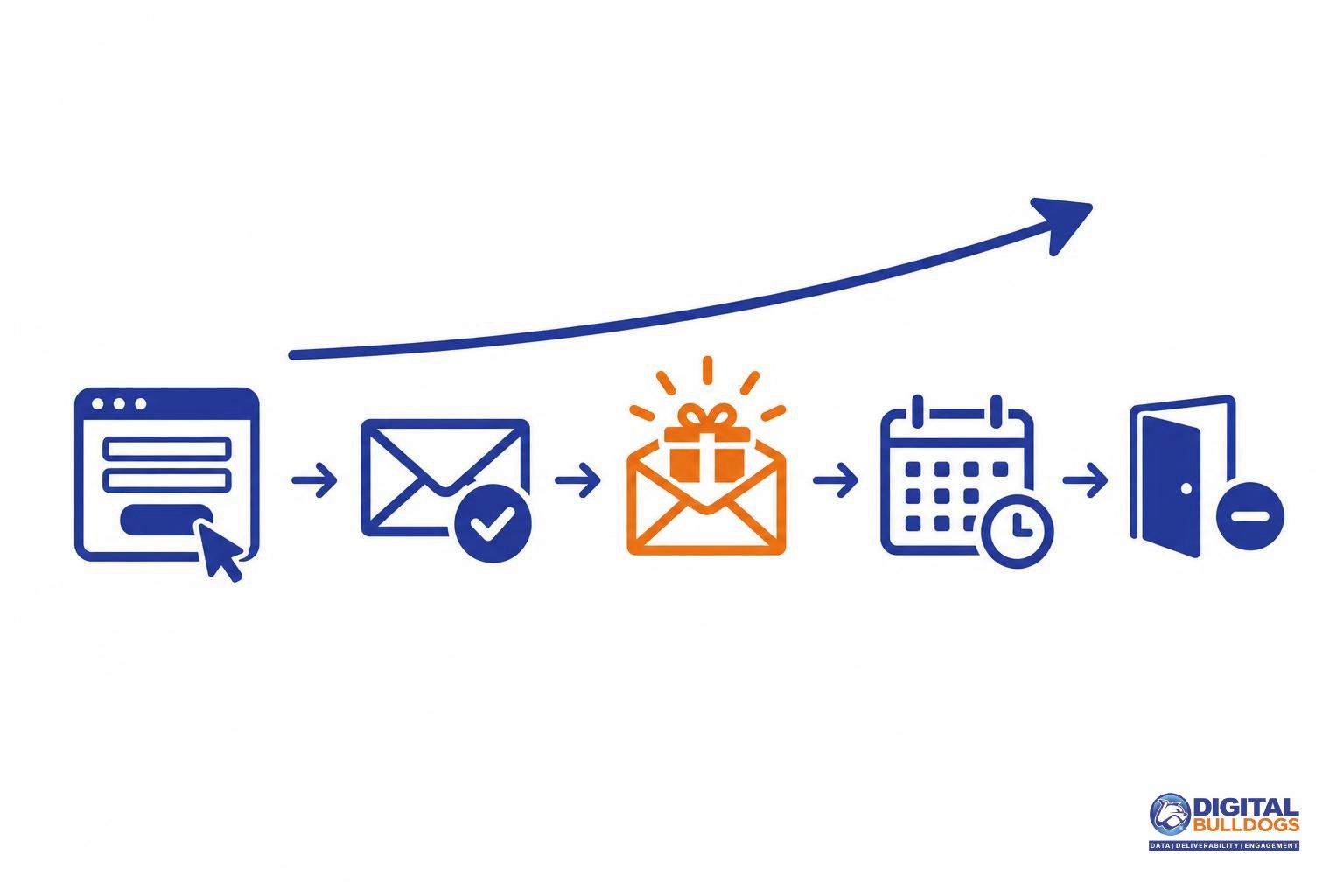
If one cohort’s complaints, bounces or spam-trap signals start climbing, stop mailing that cohort now and work out the cause afterward. Every extra send to a bad segment affects the reputation your whole domain carries, so containment comes before diagnosis.
- Pause the cohort and the source. Stop sends to the affected tag. Also turn off new intake from that form, partner or offer until you know what changed. Common causes include a broken confirmation step, a new traffic source or a wave of bot signups.
- Clean what’s already there. Yahoo’s sender best practices ask bulk senders to remove invalid recipients promptly, so strip hard bounces right away. Then suppress every address in the cohort that never confirmed. Spamhaus’s sender guidelines advise against mailing unconfirmed addresses at all.
- Re-permission or sunset the rest. Don’t fold the remaining addresses back into your regular sends. Send a short re-confirmation that asks whether they still want your mail. Keep the people who say yes and retire the others.
Expect recovery to be slow. Google’s email sender guidelines note that improvements in spam rate can take time to show up in how your mail is classified. That delay is why catching a bad source early costs far less than repairing the damage later. For the longer repair work, our guide on how to improve domain reputation walks through the steps. Our list management and hygiene service can handle the cleanup if you’d rather not do it in-house.
If a source has already hurt your domain’s inbox placement and you’d like a second opinion, you’re welcome to book a free consult with Digital Bulldogs.
Signup source review checklist
Use this list before you approve a new acquisition source, and again whenever you review the sources already feeding your list. If a source fails any item, fix it or pause it before it sends more addresses to your list.
- Clear consent, with your brand named. The person should know they are signing up for your mail specifically. M3AAWG’s sender best practices say consent must be clear and obvious, and that consent implied by something else, such as a purchase, is not best practice. Google’s email sender guidelines also ask senders to avoid pre-checked opt-in boxes.
- Stored proof of consent. Every record should carry a timestamp, the page or form it came from, and the version of the consent wording the person saw.
- Confirmed before marketing mail. Confirm the address before any promotional message goes out. Google’s guidelines ask senders to confirm each address before subscribing it.
- Tagged in your ESP. The source tag should let you report complaints, bounces and engagement for this cohort separately from the rest of your list.
- CAN-SPAM basics in every message. Each message needs accurate headers, an honest subject line and a postal address. Opt-outs must be honored within 10 business days, as set out in the FTC’s CAN-SPAM compliance guide. Add one-click unsubscribe wherever mailbox providers require it.
- Complaint rate tracked, with a pause point. Google’s sender guidelines FAQ asks senders to keep spam rates below 0.1% and never reach 0.3%, and it calculates the rate daily. Track each cohort against that range and against Yahoo’s Complaint Feedback Loop data. Write down the exact rate at which you pause the source, so the decision is made before a problem starts.
If you want a second set of eyes on your acquisition sources or cohort reporting, you can book a free consult with Digital Bulldogs.
Frequently asked questions
Does CAN-SPAM require opt-in consent before I email new subscribers?
No. CAN-SPAM’s core rules focus on honest commercial email, not prior permission. You need accurate header information, truthful subject lines, a valid postal address, and a working opt-out that you honor within 10 business days. The law also has no exception for business-to-business email, and penalties reach up to $53,088 per violating email under the FTC’s CAN-SPAM compliance guide.
If a partner or affiliate sends on your behalf, you can’t contract that responsibility away. Meeting the legal minimum also won’t protect your inbox placement. Mailbox providers expect clear, confirmed consent, so treat CAN-SPAM as the floor rather than the standard.
Are co-registration leads safe for deliverability?
They carry real risk, because the subscriber often didn’t know your brand when they signed up. Spamhaus advises confirming every address before mailing it. Confirmation filters out bot signups and typo addresses. Spamhaus also notes that purchased, rented and harvested lists are the most common source of spam-trap hits, and co-registration feeds can drift toward that territory when partners cut corners.
Before you mail, require proof that your brand was named at signup, a confirmation step, and a separate source tag so you can measure the leads on their own. Legal liability for those sends still sits with you.
Is a checkout opt-in the same as explicit consent?
Not by best-practice standards. M3AAWG treats consent gathered at purchase as implied consent, and implied consent falls short of best practice. Its guidance says senders relying on it should closely monitor complaints, opens and clicks, and move those contacts toward explicit consent.
In practice, keep buyers on transactional and closely related mail at first. Then invite them to opt in to your marketing program.
What spam complaint rate should I watch for each signup source?
Google asks senders to keep the spam rate below 0.1% and never reach 0.3%. Google calculates the rate daily. Bulk senders above 0.3% become ineligible for mitigation. Yahoo also asks bulk senders to stay below a 0.3% complaint rate and monitor it through its Complaint Feedback Loop.
Apply the 0.1% line to every signup cohort you tag in your ESP. A risky source can push past it while your overall average still looks fine.
Should sweepstakes and contest entrants get my regular newsletter?
Only if they clearly asked for it. People who entered to win a prize often expected nothing beyond the contest. Google’s guidelines say to opt in and confirm each address, avoid pre-checked opt-in boxes, and periodically confirm that recipients want to stay subscribed.
Use a separate, unchecked newsletter box on the entry form. Send a confirmation message, and mail only the people who confirm. If you’d like help setting up this kind of source-by-source review, you can book a free consult with Digital Bulldogs.
Sources
- Email sender guidelines · Google (Gmail Help)
- Email sender guidelines FAQ · Google (Gmail Help)
- Sender Best Practices · Yahoo Sender Hub
- M3AAWG Sender Best Common Practices · Messaging, Malware and Mobile Anti-Abuse Working Group (M3AAWG) · 2026-08-27
- CAN-SPAM Act: A Compliance Guide for Business · U.S. Federal Trade Commission
- Sender Guidelines · Spamhaus