
Reverse Email Append: Postal, Phone and Demographic Data
Yes—reverse email append can match an email-only list to names, postal addresses, phone numbers and demographic fields, though not every record will return every field; the FTC has documented these matching and append practices. Before using the results, review applicable privacy obligations and channel-specific permissions, including consent requirements for covered calls and texts and Do Not Call obligations for covered telemarketing—a matched phone number is not proof of permission to contact someone.
Privacy review also needs to account for differences among state laws, including their coverage and sale or targeted-advertising opt-outs. Do not assume one rule applies to every person on your list.
This article explains how records connect, how to review identity matches separately from contact permissions, and how to plan postal, phone, demographic, firmographic and custom-audience uses. It closes with a first-project checklist: define the scope, review a sample, evaluate the returned fields and permissions, then decide what to use.
What is reverse email append?
Reverse email append starts with an email address and seeks associated customer details, such as a name, postal address, phone number or demographic attribute. The email is the starting point—not the field you are trying to add. The FTC describes email-to-name-and-address matching, telephone appends and additional demographic attributes in its data append findings.
For a marketer or agency enriching an existing customer file, the first question should be: Which missing field do we need, and what will we use it for? That keeps the project focused on a practical decision rather than collecting every available attribute.
- Postal address: Define the direct-mail campaign the added address would support.
- Name: Identify whether the goal is reviewing customer identity or improving how records are organized.
- Phone number: Specify the intended contact use, with a separate review of permission before outreach.
- Demographic details: Name the segmentation question the added information should help answer.
Keep the scope centered on enriching records you already hold. A returned field should be reviewed for its fit with that purpose, not treated as an automatic reason to expand into another channel. If your requested output is an email address rather than information associated with one, use the separate email append guide to evaluate that project.
Reverse email append matching: what connects the records?
Reverse email append connects an email address to information associated with it in existing records. But a returned name, postal address or phone number does not, by itself, establish that every field belongs to the same person.
The FTC describes matching incoming information to existing records, reconciling conflicting attributes and applying similar association processes to append products in its discussion of matching and data quality. That explains the basic mechanics—not the reliability of a particular provider’s results.
Before accepting an appended file, ask the provider to explain what connects each record:
- Association level: Does the result represent a person-level match, a household-level association or an unresolved connection? Request a definition for every returned status.
- Field provenance: Where did each appended field originate? Ask whether it was observed directly or derived, and request its observation date.
- Confidence: What does each confidence label mean, and does it describe the record association or an individual field?
- Conflicting candidates: What happens when an email connects to different names or addresses? Ask whether the provider selects a candidate, returns alternatives or leaves the association unresolved.
Evaluate identity separately from field completion. The distinction between data append versus identity resolution matters here: filling an empty address field is a different task from deciding which person a record represents.
Request separate reporting for matched records and populated fields, with person-level and household-level results clearly distinguished. When reviewing how to interpret email append match rates, check exactly what qualifies as a match rather than treating every completed field as a resolved identity.
Reverse append email to postal address: plan the mail use
For a direct-mail follow-up project, define the mailing record you need before requesting a match: recipient name, street address, unit, city, state and postal code. Make those fields part of the scope when discussing audience data append services, rather than accepting an unspecified “address found” result.
The FTC’s historical review of data-broker practices documents email-to-name-and-address matching and the reconciliation of conflicting records. For your project, ask whether each returned address is associated with a person or a household. Also request the provider’s definitions of address recency and postal validation: what was checked, when it was checked and what the returned status means. Keep postal validation separate from evidence that the intended recipient is associated with that address.
Set acceptance rules before reviewing the output:
- Missing units: Hold records with unresolved apartment or suite details out of the mailing file.
- Conflicting addresses: Require a documented selection rule or route the record for review.
- Unresolved recipients: Keep uncertain name-to-address associations separate from accepted records.
- Duplicate households: Decide whether the campaign should send to each named person or only once per household.
Treat direct mail as a proposed channel for a reviewed test—not an automatic entitlement that comes with an email match. Approve the audience, message and address-quality rules before releasing a mailing file, and keep rejected or unresolved records out of that test.
Email to name and address append: review identity separately
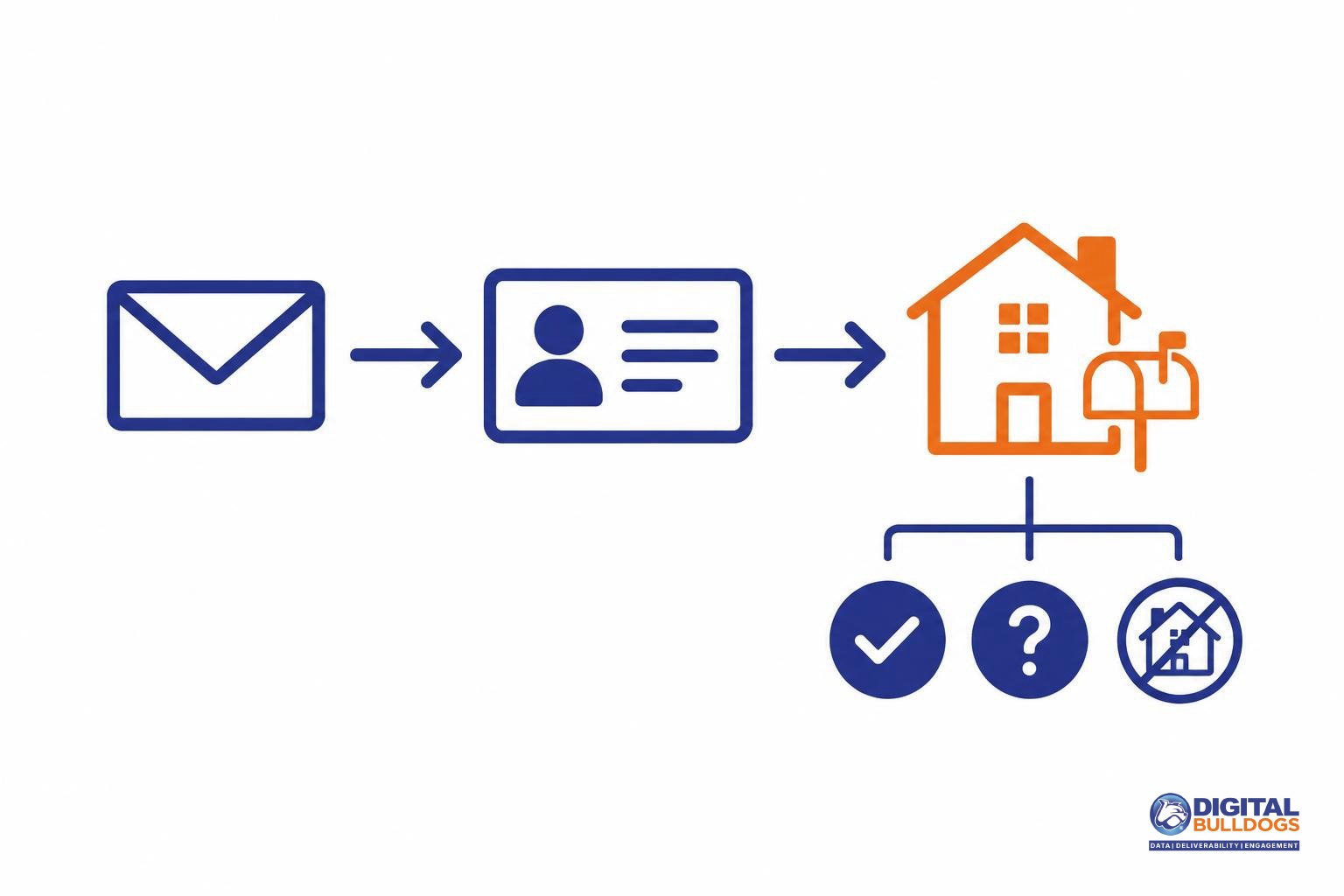
For an email-to-name-and-address append, evaluate the returned name and address together before accepting an individual match. An address association alone should not be your acceptance rule for identifying a person.
The FTC’s data broker report documents email-to-name-and-address matching, record association and reconciliation of conflicting information. For your project, turn those matching questions into explicit acceptance rules rather than treating every returned field as confirmed customer information.
- Preserve the original record identifier. Keep each returned name-and-address pair tied to its source customer record. Review the pair together, and keep proposed append values separate from existing customer-provided values until accepted.
- Require an unresolved status. If the provider cannot distinguish among candidate people, require the result to remain unresolved. Do not let an ambiguous result become an accepted individual match simply because the import requires a populated field.
- Separate household from individual associations. Use distinct labels for household associations and accepted individual matches. Preserve those labels during import; do not silently relabel a household association as a person-level match.
- Set a personalization threshold. Decide whether the planned message requires a confirmed individual association. A personal salutation, for example, should use only a name that meets your project’s acceptance standard—not merely a name associated with the same household.
If the evidence does not meet that standard, leave the personalization field unused. Keeping an unresolved result visible is more useful than importing certainty the matching process did not establish.
Phone append from email list: separate matching from permission
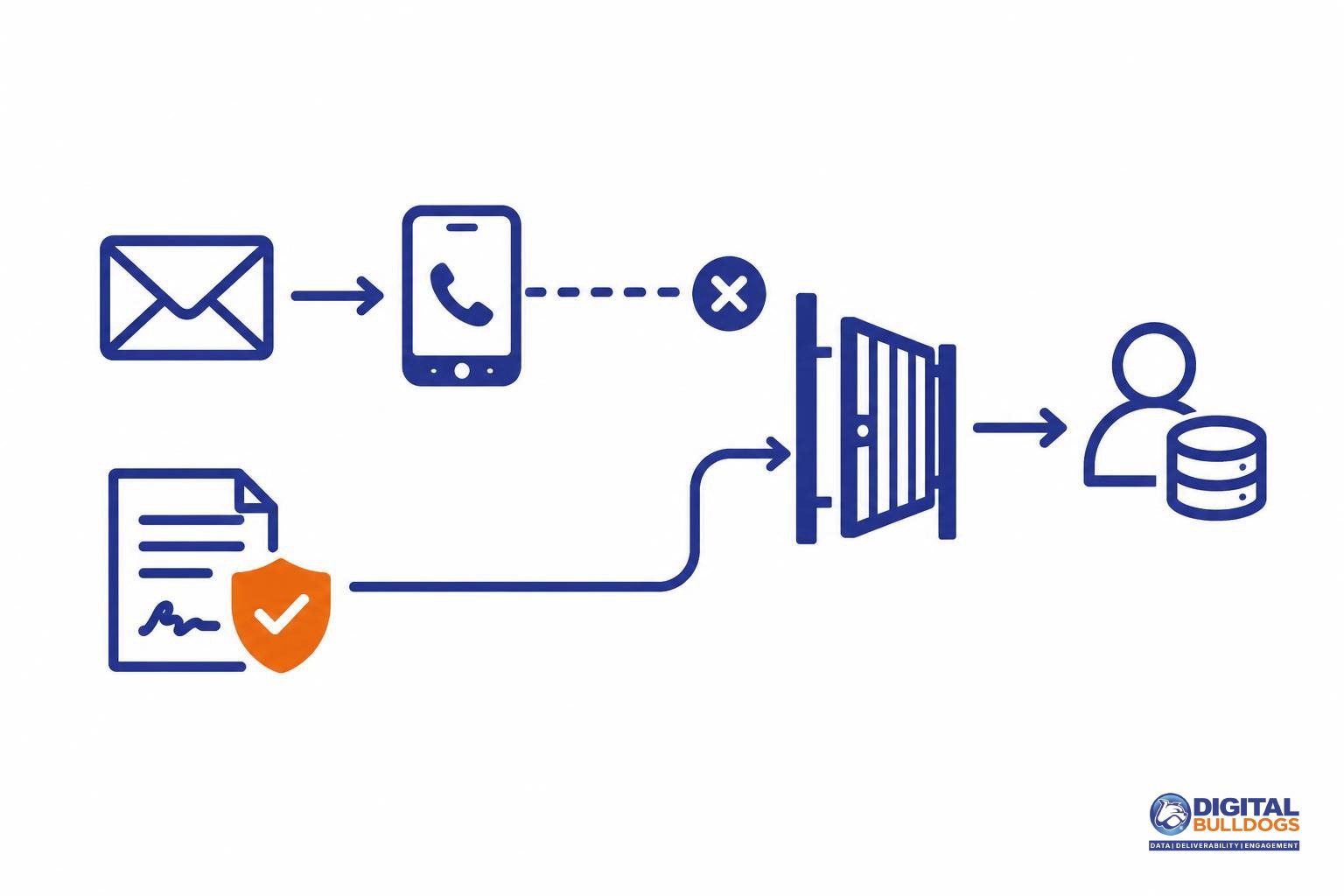
A phone append requests a telephone field associated with an email record. It does not, by itself, authorize marketing calls or texts. For a US campaign, treat matching and permission as separate review steps.
For covered telemarketing calls using an automatic telephone dialing system or an artificial or prerecorded voice, FCC rules generally require prior express written consent. The rules also address text messages and define the required agreement in the FCC’s telephone and text delivery restrictions. A returned number is not evidence that the recipient signed an agreement covering your planned outreach.
The FTC’s Telemarketing Sales Rule guidance separately addresses National and seller-specific Do Not Call obligations, relevant exceptions, and written-agreement requirements for covered prerecorded telemarketing calls in its telemarketing compliance guide.
Keep the project request clear:
- Request telephone fields separately from consent records. Do not label a matched number as permission to contact.
- Ask for the source and scope of any claimed permission. Establish who collected it, which seller and outreach it covers, and what supporting evidence is available.
- Review before activation. Have counsel assess the proposed calling or texting method, purpose, recipient, applicable exceptions, and state requirements.
Do not treat an appended number—or an existing email subscription—as the authorization record for calling or texting. Decide whether the proposed use is permitted before moving the matched records into a campaign.
Choose demographic, firmographic and custom-audience uses
Start with the decision you want appended data to support—not a request for every available field. The FTC distinguishes actual attributes from derived attributes and describes demographic enrichment, segmentation and online audience matching in its review of marketing data products. That distinction matters when deciding how much weight to give a returned value.
- Email segmentation: Choose a specific decision to test, such as which content to send to a segment, and request only the fields needed for that decision. Ask which values are observed and which are modeled or inferred. Set a rule for missing or uncertain values rather than treating every populated field as equally reliable. For a closer look at field selection, see these demographic data append considerations.
- Business audiences: Request a separate firmographic specification covering the person’s company association, company name, industry and business location. Require a source and an acceptance rule for each requested field—for example, whether an industry value must describe the matched company rather than a parent organization. Use the guide to B2B and first-party data append to explore that service separately.
- Custom audiences: Before uploading records, review the intended platform’s customer-data terms, permitted data sources, required notices and opt-out handling. Make that review specific to the dataset and intended use; a successful identity match is not permission to activate the record.
Keep the initial specification narrow enough to review field quality and test the intended segmentation decision before expanding it.
Review state privacy obligations without assuming one national rule
Before activating reverse-appended data, have counsel map the project to the state privacy laws that apply. A matched postal address, phone number or demographic field does not establish which uses are permitted.
The Congressional Research Service describes state privacy laws with differing coverage, consumer rights and business obligations—including sale and targeted-advertising opt-outs—in its US privacy-law overview. Use that variation as a reason to review your specific workflow, rather than applying one state’s requirements nationwide.
Before choosing how to activate the appended records, ask counsel to review:
- Coverage: Relevant states, covered entities, exemptions, data categories and intended processing, including identity matching, segmentation and audience sharing.
- Notices and vendor roles: Whether collection notices address the planned uses, how each party’s role is classified under applicable law, and what contractual limits govern use, retention and onward disclosure.
- Consumer requests: Which access, deletion, correction and opt-out rights apply to the project, and how requests will be handled across original records, appended fields and linked profiles.
- Downstream activation: Whether transfers to audience platforms or other recipients trigger applicable sale or targeted-advertising obligations, and how relevant choices will carry through.
Assign a named owner for receiving requests and coordinating any required action with append vendors and downstream recipients. Document who must propagate applicable deletion, correction and opt-out requests, how completion will be tracked, and what happens before the next audience refresh. Turn the legal review into written project rules that your data and campaign teams can follow.
A first-project checklist: scope, sample, review, then decide
Start with a limited reverse email append project—not a commitment to activate every returned field. Put the decisions below in writing before transferring customer data.
- Define the brief. Name the existing audience, requested fields, intended channels and permitted uses. Separate postal outreach, phone contact, segmentation and custom-audience plans so each use gets its own review.
- Agree on data handling. Document input eligibility, suppression handling, transfer arrangements, retention, deletion and restrictions on reuse. Include a state-law review: state privacy laws differ in coverage, rights and obligations, including sale and targeted-advertising opt-outs.
- Request a reviewable sample. Ask for original record identifiers, field provenance, match status and unresolved records. Require clear reporting denominators: does “matched” mean records submitted, eligible records or something else? Distinguish observed from inferred attributes; the FTC’s historical findings describe actual and derived data and record reconciliation.
- Set acceptance rules first. Define acceptable identity associations, address completeness, field recency and documented channel authorization before reviewing results. A returned phone number is not consent evidence; assess planned calls or texts against applicable FCC requirements.
- Protect recorded preferences. Keep existing email suppression and permission records separate from enrichment fields. Do not let a newly appended attribute overwrite a customer’s recorded preferences.
- Decide whether to proceed. Choose a narrowly scoped test and define the evidence that would justify continuing. Retain the option not to activate the appended fields.
For help discussing scope, book a free consult with Digital Bulldogs. For more background before deciding, explore the email deliverability and audience data guides.
Frequently asked questions
What information can a reverse email append project request?
You can scope a project around names, postal addresses, telephone numbers or demographic attributes associated with email records. The FTC’s historical data-broker report documents these matching and append practices, including distinctions between actual and derived information. Treat those findings as an explanation of the mechanics, not a current provider’s catalog. Ask prospective providers which fields they offer and how each field is sourced.
What should I ask before accepting an email-to-name-and-address match?
Ask what connects the email address to the returned name and postal address, whether the match represents an individual or a household, and how conflicting records are handled. Request a sample with field definitions, source information and any available update dates. Review identity accuracy separately from address usability, and agree in advance on how ambiguous matches should be flagged or excluded.
Does an appended phone number establish permission for marketing calls or texts?
No. A returned phone number is not evidence that the person gave any consent required for your campaign. The FCC’s calling and texting rules establish requirements for covered communications, including prior express written consent in specified circumstances. Separately, the FTC’s Telemarketing Sales Rule guidance explains applicable Do Not Call obligations and prerecorded-call requirements. Review the proposed outreach and supporting permission records before use.
What should a US business review before using appended data for targeted advertising?
Review which state laws cover your business and intended audience, then assess the proposed data use against applicable notice, consumer-rights and opt-out obligations. The Congressional Research Service’s privacy-law overview describes differences among state laws, including sale and targeted-advertising opt-outs. Document the intended audience activation, ask how providers handle relevant consumer requests, and get legal guidance on the requirements that apply to your project.
Sources
- Data Brokers: A Call for Transparency and Accountability · Federal Trade Commission
- 47 CFR § 64.1200 — Delivery restrictions · Electronic Code of Federal Regulations; Federal Communications Commission
- Complying with the Telemarketing Sales Rule · Federal Trade Commission
- Preemption and Privacy Law · Congressional Research Service · 2025-08-29