DMARC Subdomain Policy: sp Tag Rules and Inheritance
For an existing subdomain, a valid DMARC record at that exact domain takes precedence; otherwise, its DMARC subdomain policy follows the applicable parent policy’s sp tag, or p if sp is absent. Use sp for a shared inherited policy, and publish a separate record when a sending subdomain needs different enforcement or reporting settings, following the current DMARC policy-discovery and inheritance rules.
This article explains how to find the organizational domain, compare parent and subdomain records through worked examples, and decide which sending subdomains need their own records. It also distinguishes non-sending subdomains from nonexistent names, shows what to check in reports before changing an inherited policy, and keeps DMARC inheritance separate from mailbox-provider sender requirements.
Which DMARC policy applies to a subdomain?
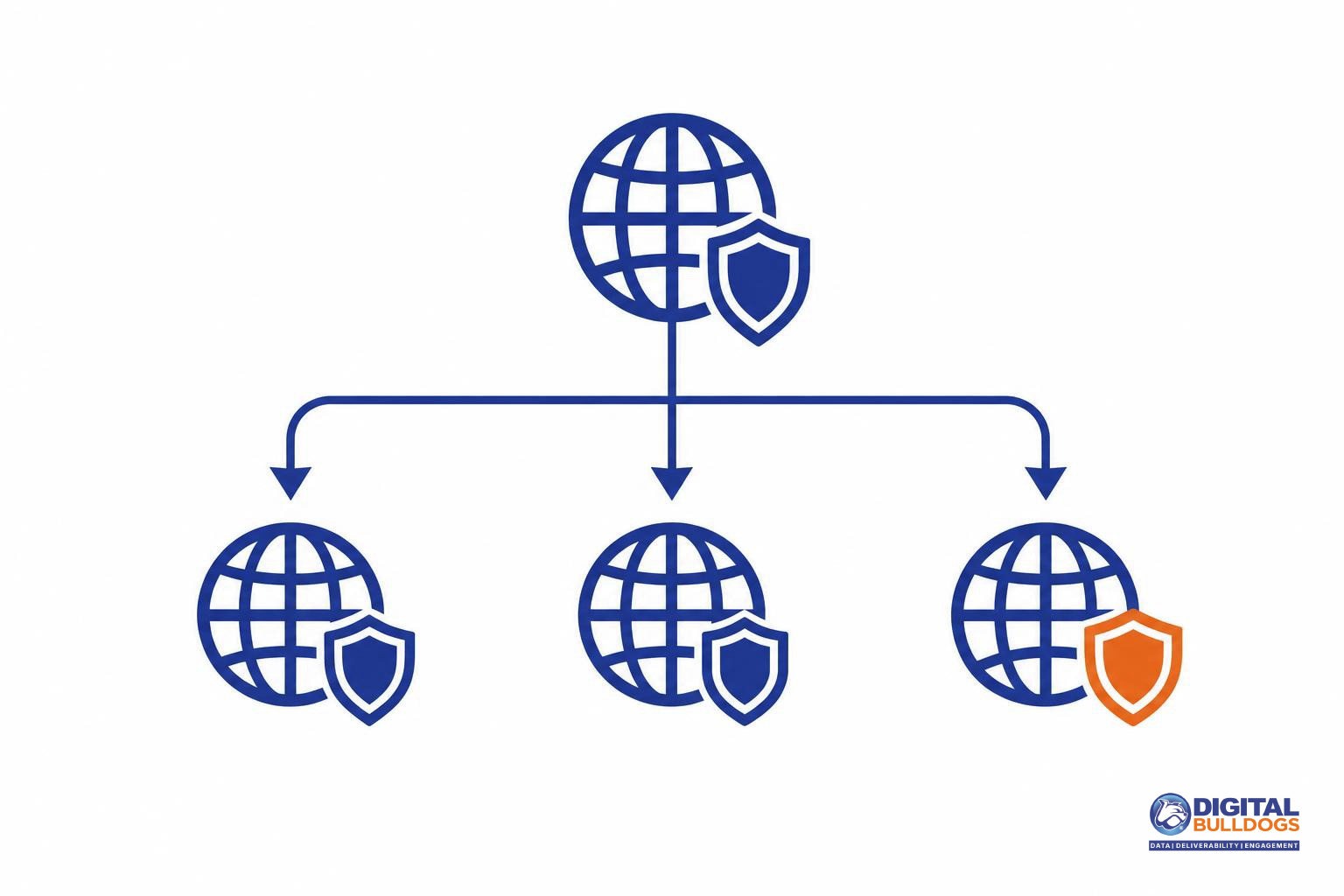
A valid DMARC record at the exact domain in the visible From address supplies that domain’s p policy. If there is no valid record there, an inherited policy can apply. When the organizational domain’s record supplies that policy, sp sets the policy for its subdomains; if sp is absent, p is the fallback for existing subdomains. These are the current DMARC policy-selection rules.
For example, suppose example.com is the organizational domain and a message uses offers.example.com in its From address:
- With its own record: A valid record at _dmarc.offers.example.com containing p=none supplies a monitoring policy for that From domain, even if example.com publishes sp=reject.
- Without its own record: If the organizational domain’s record supplies the inherited policy and contains p=reject; sp=quarantine, the subdomain receives the quarantine policy.
- Without an sp tag: If that organizational-domain record contains p=reject and no sp, an existing subdomain inherits reject.
The sp tag does not change the organizational domain’s own policy. In the p=reject; sp=quarantine example, example.com still requests reject for its own DMARC-failing messages. The original p and sp definitions in RFC 7489 distinguish these two roles: p governs the publishing domain, while sp specifies its subdomain policy.
Start with the exact From domain, then trace inheritance—not the other way around. The sending platform’s domain alone does not tell you which policy applies.
Find the organizational domain before tracing inheritance
Before deciding which parent policy applies, identify the organizational domain and the discovery rules being used. A subdomain’s nearest parent is not automatically the place a receiver looks for an inherited DMARC policy.
Under the original specification, public-suffix boundaries determine the organizational domain: it is the public suffix plus the next domain label. Discovery checks for a DMARC record at the exact domain in the visible From address, then at the organizational domain if no record is found. It does not check every intermediate parent. These are the original organizational-domain and discovery rules.
For example, under those original rules, a message from offers.mail.example.com would trigger a lookup at _dmarc.offers.mail.example.com, followed, if needed, by _dmarc.example.com. A record at _dmarc.mail.example.com would not enter that discovery path simply because it sits one level above the From domain.
That shortcut is not a universal description of current DMARC. In May 2026, RFC 9989 obsoleted RFC 7489 and introduced DNS tree-walk discovery, changing how receivers discover policy and determine the organizational domain. Keep the original lookup model separate from the current standard when tracing inheritance.
Also keep domain architecture separate from authentication. When choosing a subdomain or root domain for marketing email, remember that naming a marketing subdomain does not configure it. You still need to set up the applicable authentication and alignment described in Gmail’s sending-domain authentication guidance.
Compare parent and subdomain records with worked examples
A subdomain can inherit its parent’s DMARC policy or use a record published specifically for that subdomain. These illustrative records show how the policy choice changes; they are alternatives, not multiple DMARC records to publish at the same DNS name.
Parent policy with no sp tag
_dmarc.example.com TXT “v=DMARC1; p=reject”
Under the original specification, if example.com is the organizational domain and news.example.com has no overriding record, the subdomain inherits the reject policy. With no sp tag, the parent’s p value supplies the inherited policy.
Separate parent and subdomain policies
_dmarc.example.com TXT “v=DMARC1; p=none; sp=reject”
Here, p=none requests no DMARC-based enforcement for example.com itself, while sp=reject requests rejection for messages that fail DMARC using an inheriting subdomain. The original specification’s p and sp inheritance rules define both examples. These are requested policies, not guarantees of receiver handling.
An exact subdomain record takes precedence
_dmarc.news.example.com TXT “v=DMARC1; p=none”
Adding this record alongside either parent example makes none the policy for news.example.com itself, rather than the inherited reject policy. The current specification establishes exact-domain record precedence: a valid DMARC record at the author domain takes priority over an inherited policy.
The distinction is the DNS name: the parent and subdomain records can coexist because they are published at different names.
When should a sending subdomain have its own record?
Give a sending subdomain its own DMARC record when you deliberately want a policy different from the one it would inherit. A separate record is not automatically necessary just because a new sending service uses that subdomain.
A valid DMARC record at the exact domain used in the visible From address takes precedence over an inherited policy. However, do not treat an sp tag on an ordinary subdomain as a blanket policy for every descendant: its effect depends on organizational-domain discovery. These distinctions follow the current specification’s rules for policy discovery, sp scope, and identifier alignment.
Before adding a record, separate two decisions:
- Policy: Does this subdomain need different handling for messages that fail DMARC, or is the inherited policy appropriate?
- Authentication: Does the sending service produce passing SPF or DKIM results that align with the visible From domain?
Publishing a DMARC record does not itself authenticate messages. For each sending service, check both SPF and DKIM configuration, then verify From-domain alignment. For direct messages to personal Gmail accounts, DMARC requires alignment through SPF or DKIM; bulk senders must configure both authentication methods under Gmail’s authentication and alignment requirements.
If those checks reveal confusion about the records involved, review what SPF, DKIM, and DMARC each do before changing policy. Use an exact-domain record to express an intentional policy choice—not as a substitute for fixing authentication.
Handle non-sending subdomains without confusing them with nonexistent names
An existing subdomain that should never send email can publish its own DMARC policy. For example, if assets.example.com hosts website files but is not used for email, an illustrative DNS record is:
_dmarc.assets.example.com TXT “v=DMARC1; p=reject”
This record asks receivers to reject messages that claim assets.example.com as their visible From domain and fail DMARC. It does not disable sending software or prevent someone from attempting to send. Receivers retain discretion over message handling, as explained in the original specification’s DMARC policy scope.
Non-sending describes how you use a domain; nonexistent describes whether the name exists in DNS. An existing name does not become nonexistent simply because you have never sent email from it.
When a subdomain inherits policy, the current standard distinguishes existing and nonexistent subdomain policies:
- Existing subdomains: sp supplies the inherited policy. If sp is absent, p supplies it.
- Nonexistent subdomains: np supplies the inherited policy. If np is absent, the fallback is sp when present, then p.
For an existing non-sending subdomain, check whether the inherited policy already expresses your intent. Publish a dedicated record when you need an explicit policy for that From domain rather than relying on inheritance.
Check reports before changing inherited policy
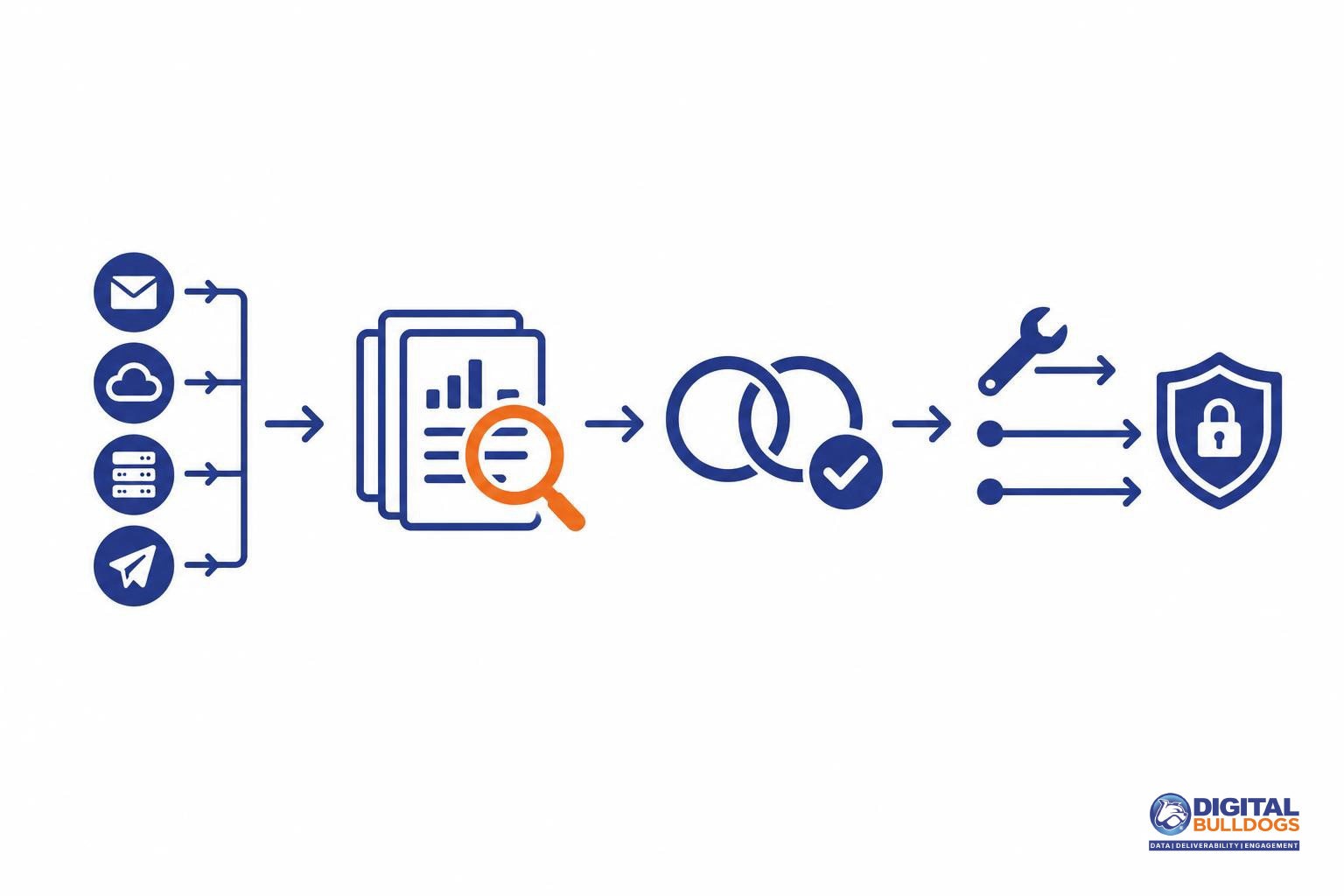
Before tightening a policy that subdomains inherit, confirm which legitimate mail streams rely on it and whether they pass DMARC. The original specification’s DMARC deployment and reporting guidance recommends using reports to understand sending activity before requesting stricter handling.
- Inventory visible From domains and sending services. List the domains recipients see in the From address, then map each to its sending platforms. Include agency-managed campaign tools, transactional services, and any separate sending subdomains. Record who can change each service’s authentication settings.
- Review aggregate reports by source and domain. Identify expected senders, unfamiliar sources, and authentication failures. Keep separate mail streams visible: a parent DMARC record does not prove that every service using a subdomain is configured correctly. Use this guide to reading DMARC reports and prioritizing fixes to organize the review.
- Check alignment, not just authentication. An SPF or DKIM pass alone does not establish a DMARC pass; a passing mechanism must also align with the visible From domain. Gmail guidance on authentication and DMARC monitoring explains alignment requirements for direct mail and recommends monitoring reports to identify authentication problems.
- Fix legitimate streams before changing enforcement. Work with each service owner to correct authentication or alignment gaps, then review subsequent reports. Before moving DMARC from p=none to p=reject, check which subdomains will inherit that change and which have their own policy.
Treat the review as a source-by-source check, not a single DNS-record check. That makes it easier to spot an overlooked agency platform before stricter handling affects its mail.
Keep inherited policy separate from mailbox-provider requirements
DMARC inheritance tells you which policy applies to a subdomain. It does not replace a mailbox provider’s sender requirements or determine whether a message reaches the inbox.
For bulk senders delivering to personal Gmail accounts, Google requires SPF, DKIM, and DMARC. A DMARC policy of p=none is permitted, but direct messages must still align the domain in the From header with either the SPF-authenticated domain or the DKIM signing domain. Authentication alone does not guarantee inbox placement; Gmail also considers factors such as unwanted-mail reports and sender reputation. Keep those distinctions in mind when reviewing Gmail bulk-sender authentication requirements.
A sending subdomain is not a separate bulk-sender classification boundary. Gmail combines messages sent from the same primary domain, including its subdomains, when determining bulk-sender status. Separating mail streams across subdomains therefore does not separate that classification, as Gmail’s primary-domain counting explanation makes clear.
For implementation, map each sending service to its From domain, SPF domain, DKIM signing domain, and applicable DMARC record. Use that map to guide DNS authentication setup and check alignment alongside authentication setup for high-volume senders, rather than treating an inherited policy as a complete readiness check.
If mapping records across sending services is difficult, Digital Bulldogs can help with implementation. Book a free consult to discuss your setup.
Frequently asked questions
Does a subdomain inherit p=reject when the parent record has no sp tag?
Yes—if the parent is the applicable organizational domain and the sending subdomain has no overriding DMARC record. Without an sp tag, the organizational domain’s p=reject supplies the requested policy for its subdomains. This fallback appears in the original DMARC specification’s policy rules. It requests rejection of messages that fail DMARC; it does not mean every message from the subdomain should be rejected.
Can a subdomain’s own p=none record override the parent’s sp=reject?
Yes. A valid DMARC record published for the exact domain in the message’s From address takes precedence over an inherited policy. For example, v=DMARC1; p=none at _dmarc.mail.example.com supplies the policy for mail using mail.example.com, rather than the organizational domain’s sp=reject. That changes the requested DMARC treatment for that domain; it does not guarantee inbox placement or exempt messages from other receiver checks.
Does putting sp on a subdomain control all of its descendants?
No. Adding sp to an ordinary subdomain’s record does not establish a blanket policy for every domain beneath it. Under the current DMARC specification’s organizational-domain and policy-discovery rules, sp applies at the organizational-domain level. Determine which domain is the organizational domain before tracing inheritance; do not assume that the nearest DNS ancestor’s sp controls a deeper sending domain.
What is the difference between a non-sending subdomain and a nonexistent subdomain?
A non-sending subdomain exists in DNS but is not used to send email. A nonexistent subdomain does not exist in DNS. These are different policy cases: the current specification’s np tag addresses nonexistent subdomains, not every existing subdomain that happens to send no mail. For an existing non-sending subdomain, evaluate its own DMARC record and the applicable inherited policy rather than treating inactivity as nonexistence.
Does Gmail count sending subdomains separately for bulk-sender status?
No. Gmail combines traffic from the same primary domain when determining bulk-sender status, including messages sent from its subdomains. Moving campaigns between sending subdomains therefore does not make those streams separate for this classification. Google explains this aggregation in its email sender guidelines FAQ. Keep that classification separate from DMARC inheritance: different subdomains can publish different DMARC policies while still contributing to the same primary domain’s sending volume.
Sources
- RFC 7489: Domain-based Message Authentication, Reporting, and Conformance (DMARC) · RFC Editor
- RFC 9989: Domain-Based Message Authentication, Reporting, and Conformance (DMARC) · RFC Editor / Internet Engineering Task Force
- Email sender guidelines · Google
- Email sender guidelines FAQ · Google